Emily’s Factory
Published on 5 July 2022
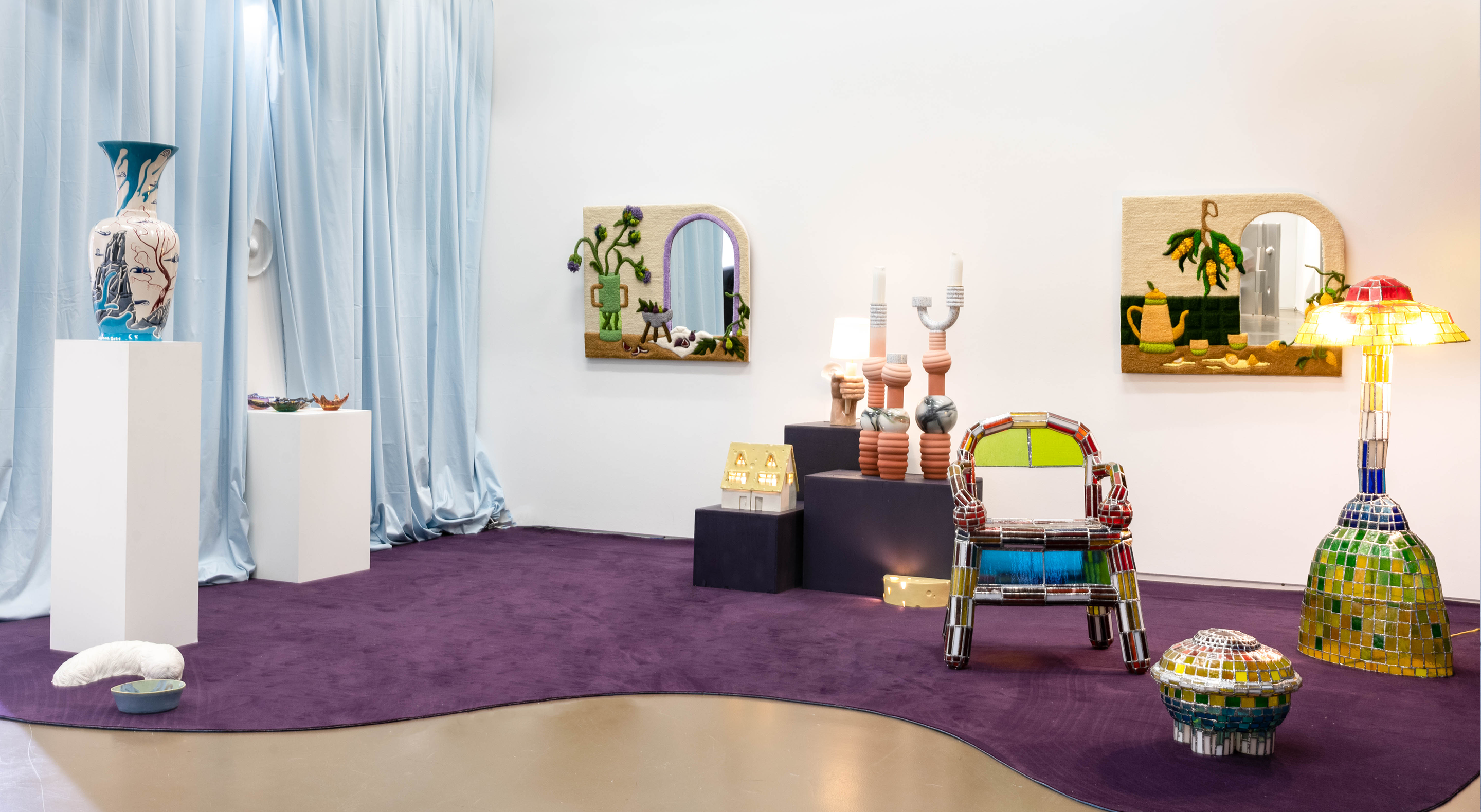
Paris Design Week has asked curator Emily Marant to select the young designers who will exhibit at Espace Commines as part of the Factory.
Vogue magazine described her as one of the Parisian “It-Girls” you need to know. Emily Marant, a Franco-British woman who grew up in France, studied fashion and design in Paris, London, and New York. This thirtysomething go-getter put her passion for design and art into practice by becoming a curator, and so much more, within her Studio Marant consulting firm. Paris Design Week has invited her to review the application forms for the Factory exhibition, which will take place at Espace Commines in the Marais district. It’s a young, cutting-edge view of emerging design.
Paris Design Week. Hello, Emily. Could you define your work for us?
Emily Marant: There are several aspects to it, but generally, my goal is to promote young designers. My clients want my perspective on the art and design markets. I define myself as a curator in a wider sense. For example, I work on helping fashion brands incorporate art into their vision, as I recently did by creating the Art Prize for The Kooples brand. I create collaborations and pop-up exhibitions, and I look for innovative concepts. For three years now, I’ve also had a design house, French Cliché, that makes collectible design that’s almost art and is made in limited editions by artisans.
PDW: What is your mission for Paris Design Week?
EM: I’ve immersed myself in around sixty application files for the Factory, trying to identify talents that make sense as part of the Paris Design Week context and its theme this year, “Meta-Sensible”. Throughout the years, Paris Design Week has become an essential springboard for young designers. We can see that young designers and design houses can express their talents here in a truly unique way.
PDW: What is your initial impression of the “tone” of the applications that have been submitted?
EM:What I find reassuring is that all of them have thought about environmental issues right from the outset. New design houses are acting, finding solutions, and prioritizing local manufacturing. It’s really something concrete. I may be 30 years old, but I don’t remember being raised with this constant concern for the environment. Such is the case for the generation right after mine. And they’re making things happen. They’re also very good at the storytelling aspect: nothing is gratuitous, and their entire approach is carefully explained and justified.
PDW: This year’s theme at Paris Design Week is “Meta-sensible”. In it, we find new aesthetics that have emerged from the digital world for the Metaverse, and, at the same time, a great awareness of craftsmanship. How is the younger generation representing this trend?
EM: We’re only in the early stages, but the influence is there. Technically, new software and the evolution in 3D printing are allowing designers to create ultra-organic shapes, even in real life. There are also paints, like those used in the automotive industry, that now produce mechanical effects. They’re finding even newer aesthetics, and we can sense that intensive research is going on. I’ve discovered things that I previously had no knowledge of, which proves that we still have so much to discover in design! In addition, mass production is less highly valued by them than are more limited production runs, often self-made. We can feel that there’s real desire and motivation and a truly incredible energy that is so diverse and highly encouraging.